Showing posts with label women. Show all posts

Saturday, March 08, 2025

Toufan (Party of Labor of Iran) on International Women's Day and the unity of the multi-ethnic working class

I received thesstatementthis week; they are posted on Facebook The four images might not appear below Slightly edited:


The Necessity of Solidarity Among Iranian Women Fighters with Women in the Region, Especially Palestinian Women
Happy March 8th, International Women's Solidarity Day,!


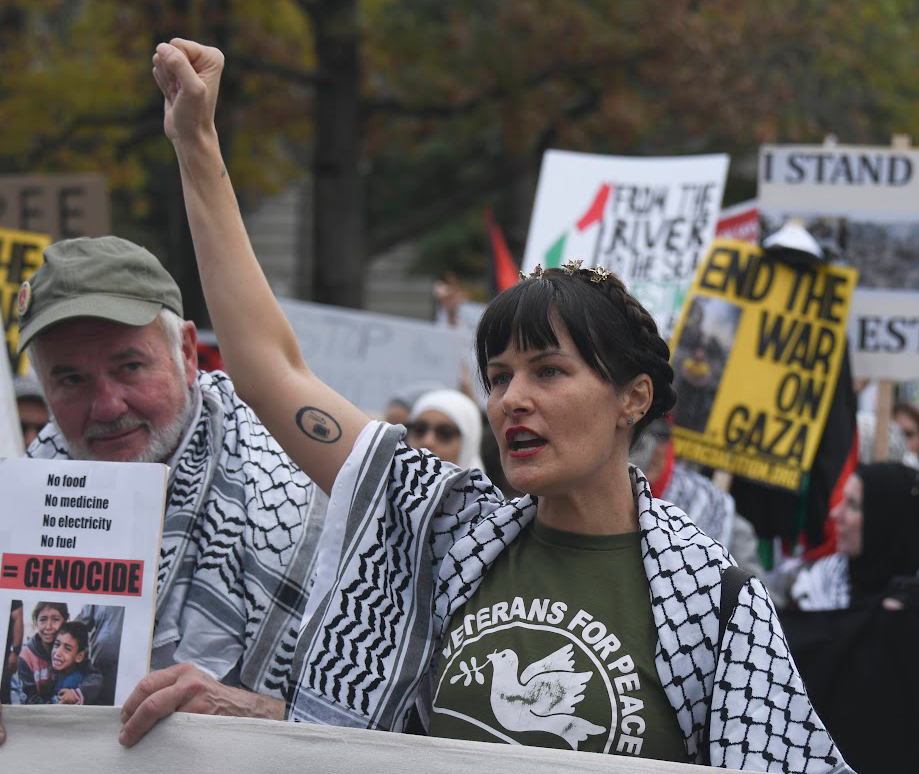
Today, the fate of Iranian women is intertwined with the fate of women in Iraq, Afghanistan, Libya, Yemen, Syria, Bahrain, and especially Palestine, as well as other women in the region. This is why the demands for the rights of Iranian women and the fight against the capitalist regime of the Islamic Republic will be empty and regressive without a consciously tie it to the struggle against imperialist and Zionist aggressions. One cannot be an advocate for the rights of Iranian women while supporting the military invasion of Gaza and the genocide in this Palestinian enclave, or passing by indifferently. This reactionary and imperialist policy, which is theorized and promoted under the guise of fighting "political Islam," "fundamentalism," and opposition to Hamas, is a Zionist trick with its roots in Tel Aviv. How can one claim to defend women's rights and equality while remaining silent in the face of genocide and mass murder of women in Gaza?

As long as imperialism, Zionism, and class reaction rule the world, any notion of liberation from exploitation and economic and social inequality is nothing but an illusion.

Happy March 8th, International Women's Solidarity Day, to all combatant women and men around the world!
A person in a headscarf being held by a person in a riot gear

AI-generated content may be incorrect.
A collage of people holding flags

AI-generated content may be incorrect.

1


The Necessity of Struggling for the Unity of the Iranian Working-Class
May be an image of one or more people, crowd and text
Class-based and capitalist governments fear worker-strikes. We saw an example of this during the 1979 Revolution, when the potential collective power of workers created significant changes. They were able to send the regime of Mohammad Reza Shah to the dustbin of history with their nationwide strike, hoping that their living conditions, job security, rights, and fair demands would be met, that they would have the right to strike, and that they would establish their own trade un-ions. The governments that came to power after the revolution, which came under the guise of supporting the underprivileged, were aware of this immense power of the working class and saw its ability to organize as a factor that could destabilize the economic foundations and political structures of the country. With their class instincts, they feared the unity of Iran's labourers and sought, through various means, to prevent workers from forming their own trade unions.

At the onset of the revolution, labour law considered many of the workers' rights, as this achievement of the revolution was imposed on the post-revolutionary government by the working class through its struggles and its decisive role in the revolution. However, after the eight-year war with Iraq, Rafsanjani's mafia government, under the pretext of rebuilding Iran and compensating for the damage of the war, followed the economic orders of the World Bank and the International Monetary Fund and adopted a neoliberal policy that aimed at looting Iran. It sacrificed Iran's economy through privatization, the suppression of workers' struggles, and the violation of their legal rights, benefiting the large bourgeoisie of Iran. This destructive policy continues to be implemented in Iran.

The first stumbling block in the path of the Iranian workers' struggles is the absence of an independent labour union whose primary responsibility is to improve the living conditions of workers, not to wage anti-exploitation war or to overthrow the capitalist system.

A labour union in Iran cannot be based on religious or ethnic affiliations. Ethno-national chauvinists in Iran want labour unions to be established on the basis of ethnicity, which in practice aims to destroy the unity of action among workers and create division among them. Naturally, these demands, if not outright suspicious, are deeply reactionary and anti-workers, and they must be fought against in the same way as the "leftist" demands for the creation of worker-soviets instead of independent labour unions. Iranian workers must struggle to establish a unified and independent labour union that enjoys public support. This class-based, democratic demand, which serves to democratize Iran's political space, must be supported. Therefore, supporting the “70% wage increase” movement and the efforts that have been underway in recent years is a positive matter, and we must focus on strengthening it.


[This is the 899th post on DS.]

Veterans for Peace: Honoring International Women's Day

On International Women's Dayen.wikipedia.org/wiki/International_Women%27s_Day


Originally posted March 4th at:  www.veteransforpeace.org/pressroom/news/2025/03/04/honoring-international-womens-day


Honoring International Women's Day


March 04, 2025

HONORING THE WOMEN OF Veterans For Peace –  for IWD and Women’s Month - March, we honor the women who are veterans, the women who are and have been close to veterans, the other women who have chosen to join us – all the women – who have provided leadership, skills, comradeship and inspiration, and who have carried out a lot of VFP’s work. 


DID YOU KNOW? 


•    That IWD, March 8, had its origins in the US, with 


*   the 1909 strike of 20,000 immigrant women garment workers [November 1909-March 1910  en.wikipedia.org/wiki/New_York_shirtwaist_strike_of_1909 ]


*    the aftermath of the deaths of women workers in 1911 at the Triangle Shirtwaist factory [March 25, 1911]


*    the Bread and Roses strike in 1912 in Lawrence, MA [January 11-March 14th  en.wikipedia.org/wiki/1912_Lawrence_textile_strike ]


•    That International Women’s Day (IWD) was originally International Working Women’s Day.   The American Postal Workers Union (APWU) writes, International Working Women’s Day was and remains a call for change that was rooted in the labor movement’s struggle for social, political, and economic rights of working-class women.  https://apwu.org/news/labor-history/history-international-working-women’s-day    


•    That a massive women’s march in Russia on March 8 (and 9), 1917 for Peace and Bread, led to the Tsar’s abdication and sparked the Russian Revolution. https://www.theguardian.com/world/2017/mar/08/womens-protest-sparked-russian-revolution-international-womens-day


SONGS – with a focus on working women and struggle (thank you, Elise Bryant)

1. We Were There by Bev Grant: https://youtu.be/Cjnyk06MZRY?si=gfqYvhVARBatVWIS

2. All the Voting Women adapted by Lynn Marie Smith: https://youtu.be/BmS0qFhTCVc?si=sKeOI7ziEhFXohxV

3. Union Maid sung by Anne Feeney: https://youtu.be/6dgwbpiFowM?si=vuVeeqepGs_iXl4t

4. I am a Union Woman sung by Bobbie McGee: https://youtu.be/3arYWg7MtWk?si=ScmKchIn4N6ziv5P

5. Bread and Roses sung by Women of the World: https://youtu.be/94mSln34ZwA?si=9nIrd1jtE9zX0qnc


[On folkways.si.edu ?]


Sunday, November 17, 2024

Scintilla: Alexandra Kollontai, Communist Revolutionary

Originally posted November 13th at:  piattaformacomunista.com/index.php/aleksandra-kollontaj-rivoluzionaria-comunista/ ; slightly edited.


Scintilla n. 149, November 2024

edited by Piattaforma Comunista – for the Communist Party of the Proletariat of Italy


Alexandra Kollontai, Communist Revolutionary


It is not easy to summarize the life and work of a woman like Alexandra Kollontai, who dedicated all her energies to the struggle against capitalism, the exploitation of the proletariat and the oppression of women, for socialism. A communist to whom women and feminist movements owe a lot.


She is deliberately cited as the proponent of "free love", thus reducing her work on the family and marriage to an erroneously libertine vision of relations between the two sexes, when instead the new communist morality always opposed bourgeois licentiousness and hypocrisy.


For Kollontai, bourgeois marriage is a chain that binds women to traditional values, values that oppress them and do not emancipate them. Marriage, which capitalism had transformed into a mere economic contract, would thus be transformed into the union of two people in love, ready to respect each other and with equal rights and duties in the family.


Aleksandra Kollontai was born into a wealthy family in St. Petersburg on March 31, 1872. She refused a marriage of convenience with a high officer who was the tsar's attendant and in 1893, against her parents' wishes, she married a distant cousin, the engineer Vladimir Kollontai, with whom she had a son Mikhail. They separated after 3 years because she considered an exclusive life as a wife and mother suffocating.


In August 1898 she moved to Zurich to attend lectures on political economy by Heinrich Herkner, a Marxist. Here she joined the social democratic movement. In 1904 Lenin called her to collaborate with a Bolshevik periodical and in November Kollontai definitively joined the Bolsheviks and also started courses in Marxism for the workers. On January 9, 1905, Kollontai was among the workers who marched to the Winter Palace and took part in the days that followed, where she distinguished herself as a brilliant orator.


In the same period she began to deepen her commitment to the question of women's emancipation and liberation by publishing "The Social Elements of the Woman Question". In 1905, in Mannheim, she participated in the Fourth Women's Conference of German Social Democracy and two years later in Stuttgart, in the Women's Conference of the Socialist International, with her friend Clara Zetkin, supporting women's right to vote. In 1908 she was tried twice on charges of anti-government activity among the textile workers and of calling for revolt in the pamphlet "Finland and Socialism". She was then forced to emigrate from Russia and go underground.


She spent her years abroad in intense political activity. In Germany she helped the Social Democratic Party in propaganda and agitation; in England she fought with the workers for universal suffrage; in Paris she organized a strike of workers for the Socialist Party; she took part in workers' struggles in Belgium, Sweden and Norway.


In 1910 she participated in the 8th Congress of the Second International. She wrote many works including "Woman and Motherhood" and "The Social Basis of the Woman Question" and worked intensively for the newspapers Rabotnitsa and Pravda.


At the International Socialist Congress in Basel in 1912, Alexandra Kollontai implemented a maternity care plan that was largely adopted in Russia in 1918. In 1915, at the outbreak of war, she took part in the Zimmerwald Conference advocating the need to boycott the war, and wrote the pamphlet "Who Needs the War?", intended for soldiers. Between 1915 and 1916 she traveled throughout the United States to plead the socialist cause and held anti-war conferences.


In February 1917, when the tsarist regime was overthrown, Kollontai returned from exile. Before leaving, Lenin sent her a pamphlet, "Letters from Afar", in which he explained that the events of February were only the first phase of the revolution and that the way to achieve peace was the seizure of power by the proletariat. She was therefore elected – first among women – to the Executive Committee of the Petrograd Soviet. It was she who organized Lenin's return to Russia and immediately supported the "April Theses".


She actively participated in the meetings of the Central Committee, including the one on October 10 in which the armed insurrection against the bourgeois government was decided. On the night between October 24 and 25 1917 she was in Smolny, the headquarters of the October Revolution.


With the seizure of power, Kollontai joined the revolutionary government and was appointed People's Commissar for Social Welfare, the first woman in the world to be a government minister.


During her tenure, she decreed the distribution of land belonging to monasteries to the peasants, the establishment of state nurseries, the creation of canteens, social laundries and maternity care. The socialization of housework would free women from gender oppression.


In 1918 Kollontai was one of the organizers of the First Congress of Russian Working Women from which the Żenotdel was born, an organization for the promotion of women's participation in public life, for social initiatives and the fight against illiteracy.


Thanks to her commitment, women obtained not only the right to vote and be elected, but also access to education, equal pay and in 1920 divorce and the right to abortion. Kollontai criticized the introduction of the "New Economic Policy" (NEP) and in 1920-21 with Alexander Shlyapnikov formed a current known as the "Workers' Opposition", which was dissolved when it lost the party congress.


After this defeat, according to the detractors of socialism, she withdrew from political life because she was no longer welcome to Lenin. In reality, since with the emergency of the civil war it was impossible for her to implement her political program, she responsibly considered it right to put herself at the disposal of the socialist cause wherever her skills were needed.


Thanks to her knowledge of languages, in 1923 she first became a member of the Soviet trade delegation in Oslo and, when Norway officially recognized the USSR, as ambassador, she became the first female ambassador in the world. In 1926 she held the same post in Mexico and in 1930 she was at the embassy in Stockholm. In 1933 she obtained from Sweden the return of the gold reserves that the anti-Bolsheviks had hidden there after the revolution. In the same year she was awarded the Order of Lenin for her activity. From 1934 to 1938 he was a member of the Soviet delegation to the League of Nations in Geneva.


The revisionists claim that she was disliked by Stalin and therefore sent abroad. She was certainly an extraordinary woman with a strong personality, who refused any relationship with the Trotskyites and other enemies of Soviet power.


It was to her that Stalin in 1939, while Nazism was about to enter the war and the USSR was still trying to negotiate with the British and French, entrusted these important words: "Many issues of our party and our people will be distorted and abused, especially abroad and, yes, also in our country. Zionism [Nazism?], in its desperate rush to gain world supremacy, will be hard on us and will retaliate because of our successes and achievements. They still consider Russia a barbaric country, a reserve of raw materials. And even my name will be calumniated; it is slandered even now. They will attribute many crimes to me".


Alexandra Kollontai died in Moscow in 1952, without ever having betrayed socialism and the Bolshevik Party, supporting the cause of the definitive emancipation of working men and women to the end.


To learn more about her person and her work, little known in our country, we recommend the following writings and books: Communism and the Family [1918, available from redstarpublishers.org ]; Conferences on the Liberation of Women (1921); Autobiography of a Sexually Emancipated Communist Woman; the novel Vassilissa (published in Italy in 1978) which tells the story of a militant communist worker, her path to emancipation as a woman and as proletarian revolutionary.


Scintilla: The women of the October Revolution

Scintilla #149 was posted November 13th at:  piattaformacomunista.com/index.php/leggete-scintilla-n-149-novembre-2024/ ; the article below was slightly edited.  Some of their works are available at redstarpublishers.org or elsewhere online, such as at marxists.org 


[October 23-24, 1923 in Hamburg, Germanyen.wikipedia.org/wiki/Hamburg_Uprising ; there was an earlier uprising March 17-April 1, 1921 in the former Province of Saxony, Prussia:  en.wikipedia.org/wiki/March_Action ]


[November 10-27, 1924 in Estonia:  en.wikipedia.org/wiki/Trial_of_the_149  Jaan Tomp was executed November 14, 1924 in Tallinn:  en.wikipedia.org/wiki/Jaan_Tomp ]


Scintilla n. 149, November 2024

edited by Piattaforma Comunista – for the Communist Party of the Proletariat of Italy


The Women of the October Revolution


In 1917, on the eve of the October Revolution, the Bolsheviks had about 2,500 women members, 36.8% of whom were workers or peasants. This is a remarkable fact, the reason for which is mainly to be found in the fact that for the Bolsheviks the equality of women and men was not merely formal. For Bolshevism, proletarian revolution and women's liberation were integrally connected.


The history of the Revolution is full of examples of dedication, enthusiasm and courage shown by Russian workers and peasants in those 10 days that shook the world, who gave their lives to defend socialism and the social and civil achievements won from the counter-revolution, but which today's narrative often forgets.


To pay tribute to them and express our gratitude, we will briefly talk about some of them. Nadya Krupskaya was not only Lenin's wife and an ardent revolutionary, she was above all a great pedagogue. During her years of exile around Europe she coordinated the various Bolshevik organizations and was editor of the newspaper Iskra. Close to Makarenko's ideas, she expressed her theories in numerous writings. She theorized that the "school of work" was to develop solidarity and collaboration through "working together", whose aim was to create the Soviet "new man".


Elena Stassova had mainly roles on technical aspects such as finding the place to hold clandestine meetings and in the distribution of the press that arrived in Russia clandestinely, an activity that continued even when she was imprisoned. After the Revolution she became secretary of the party's Central Committee and in 1921 president of the international Red Aid, a solidarity organization for revolutionary fighters that spread throughout the world thanks to her tireless work.


In the years before the Revolution, Inessa Armand became secretary of the Coordinating Committee of the Bolsheviks in Western Europe. In 1912 she was arrested in Russia while organizing the campaign for the election to the Duma. She was one of the founders of the newspaper Rabotnitsa, the Woman Worker. She took sides against the war and in 1915 organized the International Peace Conference of Socialist Women. She died in 1920 and was buried under the walls of the Kremlin, next to John Reed.


An Italian woman also participated in the socialist revolution: Beatrice Vitoldi. She had moved to Riga with her parents as a child. She was secretary of Proletkult, the proletarian cultural-educational organization. We remember her for the role of the mother who plays in the famous scene of the Odessa steps in the film "The Battleship Potemkin" by Eisenstein. In 1931 she worked at the Soviet embassy in Italy.


Many other names could be mentioned, but we remember them all with the words dedicated to them by Aleksandra Kollontai: "It is impossible to list them all, how many remain nameless? The heroines of the October Revolution were a whole army and although their names may be forgotten, their altruism lives on in the victory of that revolution itself and in all the achievements and results that working women in the Soviet Union now enjoy. It is a clear and indisputable fact that, without the participation of women, the October Revolution could not have brought the Red Flag to victory. Glory to the working women who marched under the Red Flag during the October Revolution. Glory to the October Revolution that liberated women!"